
Fault Tree Analysis (FTA) Methodologies & Software
Fault Tree Analysis (FTA) is a top-down, deductive root cause analysis method widely used in safety and reliability engineering. Using Boolean logic and visual tree diagrams, FTA identifies system failures by breaking down a major "top event" into its underlying component causes and basic events.
What is ALD Fault Tree Analysis (FTA) Software?
Safety Commander Fault Trees Analysis Module (FTA) combines accuracy and ingenuity of calculation with user experience allowing view, navigation and manipulation of huge Fault Trees typical for the 21st Century systems. Unique MMEL module supports analysis indispensable for A/C competitiveness.
Safety Commander Fault Trees Analysis Module performs both qualitative and quantitative risk analysis, automatically calculates Minimal Cut Sets (MCS), failure rates, and system unreliability, and strictly complies with international standards such as ARP4761, ARP4754A, ISO 26262, MIL-STD-1629 and MIL-STD-882E.
Initially developed for Aircraft (civil and military, helicopter, UAV, space)—which represent large, complex Systems of Systems—Safety Commander enforces A/C or System of Systems definition (standard mission/flight profile, installation zones, common FT events) to allow organizations, programs, and projects to resolve all challenges of assuring the safety of highly integrated systems. System structures can be imported from external applications or built manually in RAM Commander or Safety Commander.
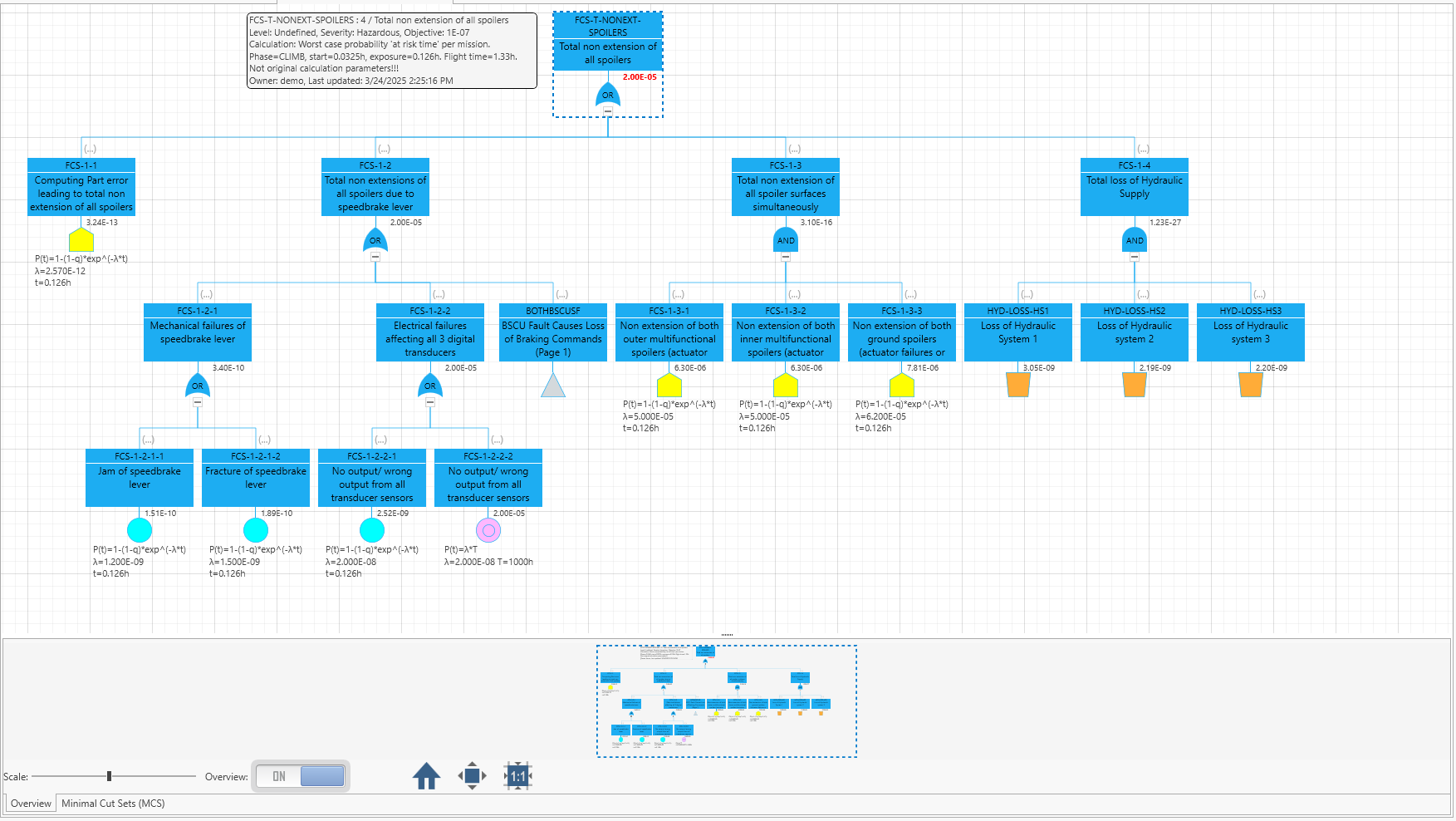
Key Calculation Formulas
Quantitative FTA relies on essential probability equations to evaluate top-level event probabilities and basic event contributions:
Methodology & System Integration
Fault Tree Analysis is one of the most widely used methods in system reliability and failure probability analysis. A fault tree provides a graphical representation of logical structures depicting undesired failure events and their root causes using basic events and logic gates.
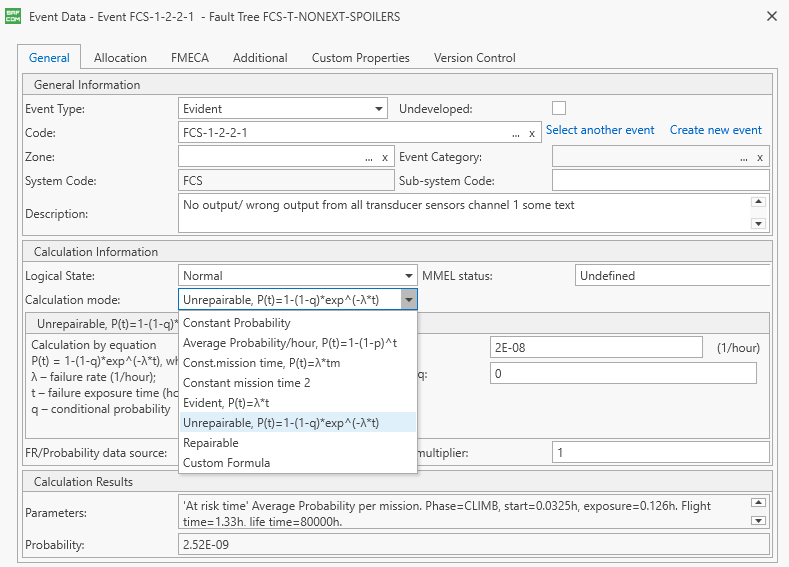
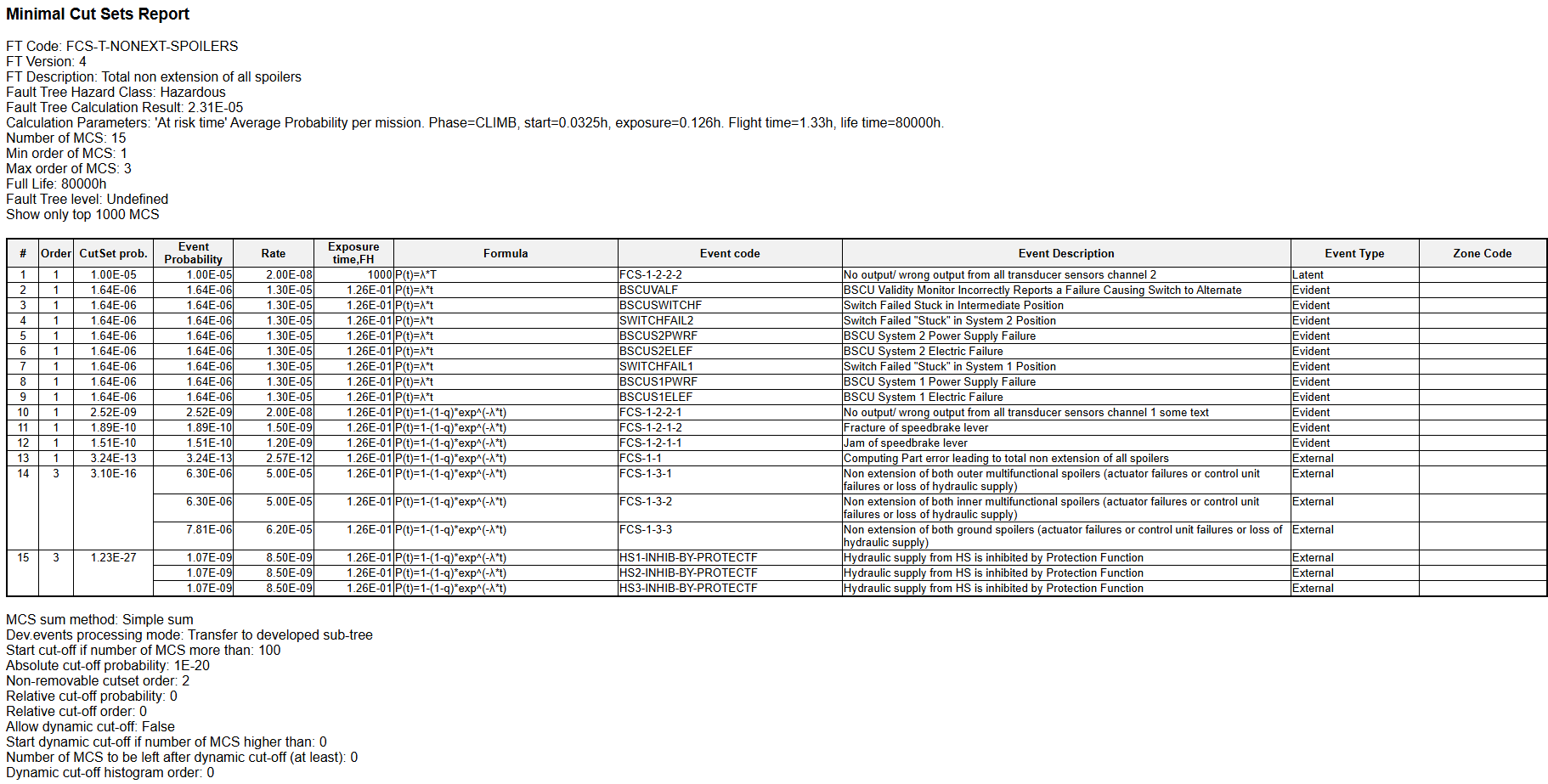
After unavailability calculation and MCS analysis, Importance and Sensitivity Analysis helps engineers select events that contribute most to system unavailability or identify components where small changes drastically impact overall safety.
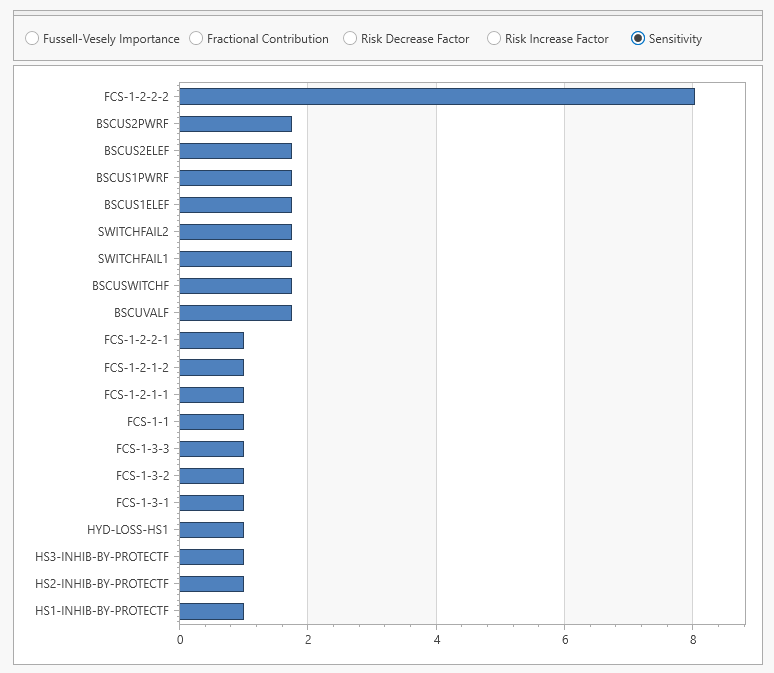
FTA is uniquely indispensable in analyzing risks and determining combinations of hardware, software, and human failures. It is utilized by other Safety Commander modules, including the Safety Assessment Module (compatible with SAE ARP4761) and MMEL (Master Minimum Equipment List analysis).
FTA Calculation Workflow
Streamlined process for performing deductive safety assessment.
Specify the critical undesired system failure condition.
Build logic hierarchy using AND/OR gates & basic events.
Assign failure rates (λ), mission times, or unavailabilities.
Automatically derive Minimal Cut Sets and gate probabilities.
Evaluate Fussell-Vesely, worst-case, and sensitivity metrics.
Fault Tree Module Features
Safety Commander Fault Trees Analysis Module (FTA) combines accuracy and ingenuity of calculation with user experience allowing view, navigation and manipulation of huge Fault Trees typical for the 21st Century systems. Unique MMEL module supports analysis indispensable for A/C competitiveness.
- Enforces A/C or System of Systems definition: standard mission/flight profile, installation zones, common FT events, etc.
- Integrates Fault Trees (FT) with multi-system dependencies and calculates integrated multi-system A/C or System of Systems FTs
- Integrates with BOM, RAM and FMECA analysis made in RAM Commander, with basic events derived from System components and FMECA failure modes
- Saves considerable engineering effort by allowing automatic recalculation caused by definition changes
- Allows various calculation types: average probability calculation, loops resolution, etc.
- Calculates very large Fault Trees with fine-grained control over MCS Truncation
- Controls codification of FT elements: trees, gates, events
- Fault Trees Comparison tools and supports model-based design (OPSA format)
- Includes Fault Tree Editor for zooming, panning, overviewing big FTs, and Fault Tree Navigator
- Imports FTs from PTC, CAFTA, Isograph (FT+), RAM Commander
- Imports/exports events to and from MS Excel
- Prints FTs with automatic separation into multiple pages
Industry Standards Supported
Full compliance guidelines for aerospace, automotive, defense, and industrial functional safety assessment requirements.
Directly import existing fault trees from PTC, CAFTA, Isograph (FT+), and RAM Commander with zero manual logic re-entry.
Frequently Asked Questions
What are Minimal Cut Sets in Fault Tree Analysis?
A Minimal Cut Set (MCS) is the smallest combination of basic events that, if they occur simultaneously, will cause the top-level system failure event to occur.
Can Safety Commander automatically generate Fault Trees?
Yes, Safety Commander supports automatic fault tree creation directly from FMECA (Failure Mode, Effects, and Criticality Analysis).
How does Safety Commander's FTA module handle large 21st Century systems?
Safety Commander Fault Trees Analysis Module (FTA) combines accuracy and ingenuity of calculation with user experience allowing view, navigation and manipulation of huge Fault Trees typical for 21st Century systems, supported by a unique MMEL module indispensable for A/C competitiveness.